Posts

Showing posts with the label physics

Metachronal waves of legs

Image
Have a look at this centipede walking. You can clearly see waves of legs propagating forward along the body, from back to front, as the centipede walks forward. The motion of the legs is known as a metachronal rhythm , appearing as traveling waves caused by actions happening in squence. It's even more obvious with a millipede. In each case, a leg in back leads the one in front. Is this universal? Four-legged creatures walk this way too. A horse leads with the hind legs when walking or galloping. When trotting, however, a horse moves diagonally-opposite legs in unison and the footfalls are balanced with no leg leading, as can be seen in this video: Try crawling on your hands and knees. When crawling at a comfortably brisk pace, you may notice your legs leading the arms. If you try to lift up an arm before lifting up a leg on the same side, you can certainly do it, but it feels unnatural. Oddly, six-legged insects and spiders don't walk this way. Inse...

Elliptical-blade NACA airfoil propeller

Image
You don't see aircraft with elliptical wings anymore. The most famous aircfaft with such wings is probably the Supermarine Spitfire fighter aircraft from World War II. Elliptical wings have the most uniform theoretical distribution of lift and therefore the least induced drag. In the case of the Spitfire, the gentle taper of the ellipse near the wing root also provided more room to mount weapons internally than a straight-taper wing, while providing an overall thinner, low-drag cross-section. However, with all curved edges, elliptical wings are expensive to construct. Of all the kinds of drag that a wing or propeller blade experiences, induced drag is an unavoidable price for lift. Induced drag has nothing to do with the drag created by surface area, surface roughness, or thickness of the airfoil. Induced drag depends on the planform shape of the wing. It is also inversely proportional to aspect ratio (the ratio of wing length to airfoil average chord length). The optimal and ...

Simulating erosion

Image
I decided to create a procedurally-generated 3D landscape in a CAD program, and wrap it around a globe, which led me to an investigation of erosion algorithms. I include a JavaScript erosion demo at the end of this article for you to play with. As an aside, let me say that I like OpenSCAD in spite of its idiosyncrasies. Other CAD programs can do many things that OpenSCAD can't, but OpenSCAD is the only 3D modelling software I know of that makes it easy to create procedural or algorithmic parametric designs. It runs on all my computers: Windows, macOS, and Linux — and it's freeware. Its main idiosyncrasy is that it uses a declarative language that requires familiarity with functional programming , a different programming mindset in which all values are evaluated at compile-time instead of run-time, meaning that all "variables" are effectively constants. Even so, one still has conditional branching, looping, and recursive functions, so one can get stuff done. For exa...

Building the strandbeest

Image
Some years ago I visited the Exploratorium in San Francisco, where I saw an impressive work of kinetic art, a large mechanical contraption with many articulated legs made from PVC pipe. It walked easily when gently pushed. Kids would take turns in groups pushing it back and forth in a parking lot. This was my first exposure to a strandbeest (Dutch for "beach beast"), a name given by the artist Theo Jansen to his walking kinetic sculptures. The link in the previous sentence has a good video showing how easily the mechanism walks. It looks almost alive. Theo Jansen has built huge strandbeesten powered by wind that walk down beaches while waving or spinning parts of themselves in the breeze. Click here to skip down to assembly instructions 3D printing a strandbeest Leg proportions for Theo Jansen's strandbeest. When we got a 3D printer in our home, I began thinking about how I would build one of these mechanisms myself. I found a few attempts already publish...

The water rocket: Numerical calculations

Image
Thrust from air So now we're ready to put all the calculations together: launch tube, water thrust, air thrust, and ballistic flight. The launch tube calculation is more like an initialization for the water thrust phase; we just have one time step of the duration of launch tube traversal. Get the initial pressure \(P_0\) for water thrust from (L1), and the velocity \(v_0\) from (L4), and use these values in the first water thrust time step. You may also want to initialize the altitude achieved as the height of the tube. Water thrust calculation For the water thrust phase, we do the following calculations at each time interval, which should be 1 millisecond or less in duration: At the beginning of time interval \(i\): Get the pressure \(P_1\) from (W4), using the change in water volume from the previous time interval. From the water volume, calculate the height of the water in the bottle — needed for \(H\) in equation (W1). This can be approximated by calculating th...

The water rocket: Thrust from air

Image
Thrust from water Numerical calculations After the water is expended, the tank (bottle) still contains substantial pressure that releases quickly through the nozzle. This final burst of air can impart a significant boost to velocity (at least 30% depending on the mass of the rocket), so we shouldn’t ignore this contribution to thrust. For convenience, however, we ignore any further affects on air temperature due to water vapor although we still calculate pressure changes adiabatically using our adjusted value of \(\lambda\). Any water vapor would likely condense by the time airflow begins. Thrust from choked airflow When the ratio of ambient pressure to total absolute tank pressure is less than the "choke ratio" $$\alpha_c = \frac{P_a}{P_e} = \left(\frac{2}{\lambda+1}\right)^\frac{\lambda}{\lambda-1} \tag{A1}$$ then the outflow is choked, or limited, to the speed of sound: $$c = \sqrt{\lambda RT} \tag{A2}$$ where \(c\) = speed of sound in air, approximately 343 m...

Popular posts from this blog

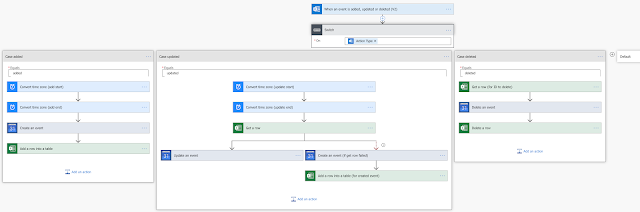
Syncing Office 365 Outlook to Google calendar using Power Automate

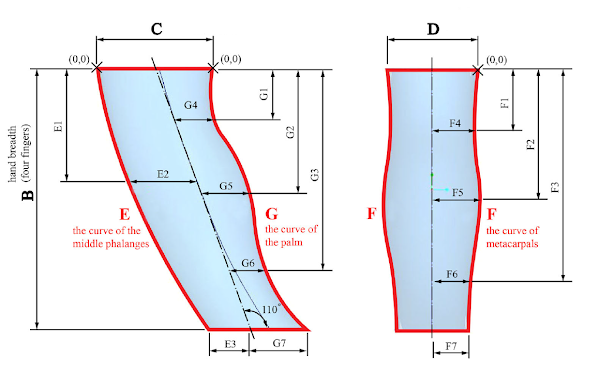
Whose hands are biggest? You may be surprised.

Elliptical-blade NACA airfoil propeller