Posts

Showing posts with the label signal processing

Metachronal waves of legs

Image
Have a look at this centipede walking. You can clearly see waves of legs propagating forward along the body, from back to front, as the centipede walks forward. The motion of the legs is known as a metachronal rhythm , appearing as traveling waves caused by actions happening in squence. It's even more obvious with a millipede. In each case, a leg in back leads the one in front. Is this universal? Four-legged creatures walk this way too. A horse leads with the hind legs when walking or galloping. When trotting, however, a horse moves diagonally-opposite legs in unison and the footfalls are balanced with no leg leading, as can be seen in this video: Try crawling on your hands and knees. When crawling at a comfortably brisk pace, you may notice your legs leading the arms. If you try to lift up an arm before lifting up a leg on the same side, you can certainly do it, but it feels unnatural. Oddly, six-legged insects and spiders don't walk this way. Inse...

Bollinger Band prediction

Image
The Bollinger Bands plot on a price bar chart is a common component of technical analysis among financial traders. Bollinger Bands display a graphical envelope around the moving average of price, with the width of the envelope representing volatility of the financial instrument charted. Exchange-traded fund SPY showing 20-day moving average (cyan centerline) and 2-standard-deviation Bollinger Bands (red), as charted by TradeStation 10. Traders sometimes use Bollinger Bands for trading signals; for example, if a stock price crosses outside of the 2-standard-deviation envelope, buy or sell the stock. This is fine for signaling market orders, but if you want to set an intra-day stop order or a limit order at a specific price based on a Bollinger Band, you don't know where that price will be, because the band changes size during a single price bar as price moves in the range of the bar. Not only does the moving price affect the value of the moving average, but it also affec...

Random walk oscillator

Image
May 2017: This is from my other blog that's no longer online. The original comments are no longer available, but you are welcome to add more. Here's an experiment. Suppose I want to make a random walk that I can control, that doesn't wander aimlessly all over, but rather is attracted to zero. The attraction back to zero wouldn't act like a force that causes steps away from zero to become smaller in size; rather, steps toward zero are simply more probable further away from zero, regardless of the step size. I'll invent a random walk that does this. We generate random walk steps in a generalized way via some inverse cumulative distribution function (cdf), which could represent a gaussian, a black swan , binary ±1 steps, whatever. This inverse cdf, in turn, takes as an input a random probability p that's uniformly -distributed between 0 and 1. (If you want uniformly-distributed steps, the step size simply equals the input p , or a multiple of p .) We need to ...

All-pole IIR filters

Image
October 2021: I originally wrote this for a different website. I have adapted the article to this blog. Part 1 of this article describes generalized formulas for any 2-pole polynomial, no-zero, lowpass or highpass, infinite impulse response (IIR) filter. We then extend the 2-pole filter to a generalization for any even-order all-pole polynomial filter. For those who want answers without effort, Part 2 of this article shows recipes for constructing some traditional lowpass and highpass IIR filters, as well as tests of these filters. I don't show the mathematics I went through in going from one step to the next. The intent here is to provide formulas for reference without having to know the details of how to derive them.   Part 1. Generalized calculations for any even-pole polynomial lowpass/highpass filter, having no zeros The filters described in this article are all-pole filters with no zeros. That is, an all-pole filter has a frequency response function that goes inf...

Popular posts from this blog

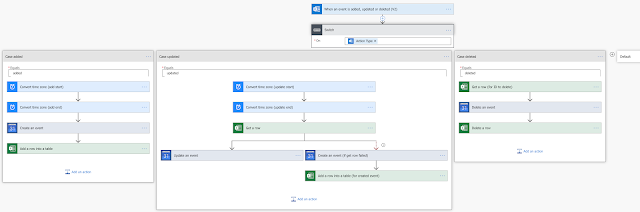
Syncing Office 365 Outlook to Google calendar using Power Automate

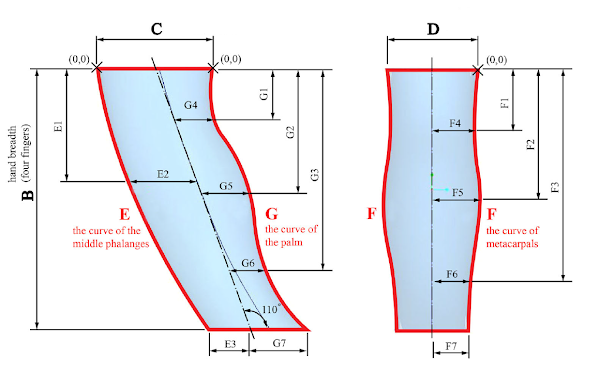
Whose hands are biggest? You may be surprised.

Elliptical-blade NACA airfoil propeller